How Much Oil in a Butterball Turkey Fryer?
A Butterball electric turkey fryer typically holds about 2 to 3 gallons of peanut oil, enough to cover a bird up to roughly 20 pounds. The exact amount depends on your model, so fill to the marked line inside the pot and never past it.
On this page (9 sections)
- How much oil does a Butterball turkey fryer actually take?
- Where do you find the fill line on your model?
- What is the water test for measuring oil?
- Why does overfilling a turkey fryer matter?
- How much oil do you need to buy for a whole turkey?
- Can you skip the oil and fry without it?
- Which fryer style fits how you cook?
- How do you clean up and store the oil afterward?
- The bottom line on how much oil to use
A Butterball electric turkey fryer typically holds about 2 to 3 gallons of oil, enough to cover a bird up to roughly 20 pounds. The exact amount depends on your model, so fill to the marked line inside the pot and never above it.
The oil question comes up most often right after the box arrives. Owners want to know how many jugs to buy before Thanksgiving, and the answer changes with the size of the fryer and the bird.
How much oil does a Butterball turkey fryer actually take?
Butterball's electric fryers generally need 2 to 3 gallons of oil, with the smaller models closer to 2 gallons and the larger ones near 3. The capacity tracks the basket size, so a pot rated for a 20-pound turkey takes more oil than one rated for 14 pounds.
That range assumes you fill to the marked line, not to the rim. The line sits below the top of the pot to leave room for the bird and for oil that bubbles up during cooking.
Jugs are sold in 1-gallon and 3-gallon sizes, so most people buy either two single gallons or one larger container. If your fryer is the bigger model, a 3-gallon jug covers a full batch with a little left over for top-ups.
The amount also depends on how much of the bird sits under the surface. A whole turkey displaces a lot of oil, so the level rises when you lower it in.
That rise is why the fill line matters more than any number in a manual.
Where do you find the fill line on your model?
Look for a stamped or printed mark on the inside wall of the pot, usually a line or notch a few inches below the rim. Some models label it in gallons, others just show a mark with no text.
If the mark is hard to see, shine a light down the empty pot and turn it slowly. Wipe the wall clean first, since oil film and grease can hide the line.
Butterball also prints the oil capacity in the manual and on the box panel. Keep that page handy, because it also lists the maximum turkey weight for that specific model.
Never guess upward. A fryer that takes 2.5 gallons does not cook better with 3 gallons, and the extra oil only raises the risk of a spillover.
What is the water test for measuring oil?
The water test gives you a safe fill level when the mark is missing or unclear. It uses water instead of hot oil, so you can measure without heating anything.
Here is how it works:
- Put the turkey in the basket and lower it into the empty pot.
- Add water until the bird is covered by about an inch.
- Lift the turkey out and mark the water level with tape or a marker.
- Empty the pot and dry it completely before adding oil to that mark.
The water level after you remove the bird is the amount of oil you need. Dry the pot thoroughly, since any water left behind will pop and spatter when the oil heats.
Do this test outdoors or over a sink, and never with hot oil already in the pot. It takes a few minutes and removes the guesswork for good.
Why does overfilling a turkey fryer matter?
Too much oil spills over when the turkey goes in, and hot oil on a burner or element can ignite. The bird displaces oil the moment it enters, and bubbling adds more volume on top of that.
The fill line exists to absorb both effects. Staying at or below it leaves headroom for the displacement and the foam that forms when cold, wet food meets hot oil.
A spill also wastes oil and makes a slick mess on the patio or kitchen floor. If you see the level climbing toward the rim as you lower the bird, stop and lift it back out.
Lower the turkey slowly with the heat off or turned down. That single habit prevents most of the accidents people worry about with turkey frying.
How much oil do you need to buy for a whole turkey?
Plan on 2 to 3 gallons for a whole bird, matching the jug size to your fryer's rated capacity. Buy peanut oil if you want Butterball's recommended choice, or another high-smoke-point oil that your manual allows.
Oil is the biggest cost of a turkey fry, so buying the right amount matters. Two 1-gallon jugs suit most mid-size electric models, while the largest pots need a 3-gallon container.
Keep a little spare oil on hand. Long cooks lose some to absorption and spatter, and a small top-up keeps the bird covered without pushing past the fill line.
Store unused oil in a sealed container in a cool, dark spot. It keeps longer that way and stays ready for the next batch.
Can you skip the oil and fry without it?
Yes. Oil-less fryers cook turkey with infrared heat and no hot oil at all, so there is nothing to measure, buy or dispose of.
They work well for anyone who wants the crispy skin without the oil cost or the spillover risk.
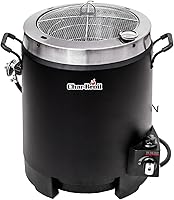
The Char-Broil Big Easy is the best-known example. Char-Broil says its TRU-Infrared cooking technology delivers even heat with no flare-ups, and the unit runs on a 16,000 BTU propane burner with rotary ignition.
It holds whole turkeys, chicken or roasts up to 16 pounds and has a front-access grease tray for cleanup. Char-Broil backs it with a 1-year limited warranty.
If you want the oil-free route, read our full Big Easy oil-less turkey fryer review.
Which fryer style fits how you cook?
Electric oil fryers suit people who want the classic peanut-oil turkey, while oil-less and propane models skip the oil math entirely. Your pick comes down to whether the fried flavor is worth the oil cost and cleanup.
Electric Butterball-style fryers are simple to run indoors or on a covered patio, and the thermostat holds a steady temperature. You buy the oil, strain it afterward and store it for reuse.
Propane fryers heat faster and work well for bigger gatherings. Our guide to propane turkey fryers covers the models built for outdoor cooking.
If you like the electric format but want more capacity and features, the Masterbuilt electric turkey fryer is worth a look. It handles more than turkey and adds flexibility for other meals.
How do you clean up and store the oil afterward?
Let the oil cool completely, strain out the bits, and store it in a sealed container. Cleanup goes faster when you have the right tools within reach.
The Nuenen set includes an L-shaped brush, a long basket brush and a cleanout rod with brass bristles. Nuenen says the tools handle heat up to about 750°F, so you don't have to wait for the basket to cool before scrubbing.
Use the angled rod for the drain area and the basket brush for the wire mesh. Long handles keep your hands away from hot surfaces.
For the oil itself, the Oggi container holds 1 gallon and has a fine mesh strainer insert and a clamp-on lid. Oggi says the strainer catches particles so used oil stays reusable.
Pour the cooled oil through the strainer, seal the lid and store it away from heat and light. A fryer kit with the right accessories makes the whole job quicker, and our roundup of turkey deep fryer kits covers what comes in each one.
The bottom line on how much oil to use
Measure your Butterball fryer's capacity first, then buy 2 to 3 gallons to match it. Fill only to the marked line, run the water test if the mark is unclear, and lower the bird slowly.
Pick an electric oil fryer if you want the traditional fried turkey and don't mind buying and straining the oil. Pick an oil-less model like the Big Easy if you'd rather skip the oil entirely and cook with infrared heat.
Whichever route you take, the oil amount is a fixed number for your model, not something to eyeball. Find the fill line once, write the gallon amount on the manual, and every future bird gets easier.
Frequently asked questions
Does a Butterball turkey fryer come with oil?
No. Butterball electric fryers ship with the pot, basket, lid and thermostat, but you buy the peanut oil separately.
Budget for 2 to 3 gallons, which is the amount most models need for a full-size bird.
Can I reuse the oil after frying a turkey?
Yes, if you strain it once it cools. Fine particles and food bits shorten oil life, so pour through a mesh strainer into a sealed container and store it somewhere cool and dark.
What happens if I overfill a Butterball fryer?
Hot oil can spill over the rim when the turkey goes in and start a fire on the burner or element. Keep the level at or below the marked fill line, and always lower the bird slowly with the power off or heat turned down.
How do I know how much oil my model needs without a manual?
Use the water test: put the turkey in the empty pot, add water until the bird is just covered, then mark the level. Empty and dry the pot fully before adding oil up to that mark.
Is peanut oil required in a Butterball fryer?
Butterball recommends peanut oil for its flavor and high smoke point, but many people use other frying oils. Pick one with a high smoke point and check your fryer's manual for its temperature limits before you buy.