How to Cook Wings in a Deep Fryer
To cook wings in a deep fryer, dry the wings, fry them in small batches at 350–375°F until they reach 165°F inside, and toss them in sauce after draining. Frying in oil that's too cool or adding too many wings at once is what makes them greasy instead of crisp.
On this page (9 sections)
- How do you prepare wings before they hit the oil?
- What temperature do you fry chicken wings at in a deep fryer?
- How many wings should you fry at once?
- How long do you fry chicken wings?
- Should you sauce wings before or after frying?
- How do you keep the oil clean and the fryer safe?
- How do you clean the fryer after wings?
- What are the common mistakes when frying wings?
- What's the takeaway for cooking wings in a deep fryer?
To cook wings in a deep fryer, dry the wings well, fry them in small batches at 350–375°F until the meat reaches 165°F, and toss them in sauce only after they drain. Wings cooked in oil that's too cool or packed too tightly steam instead of crisping.
The method matters more than the recipe. A few habits around temperature, batch size and drying keep the skin crackly and the meat juicy, and they also keep the oil usable for another round.
How do you prepare wings before they hit the oil?
Pat the wings completely dry and keep the pieces cold until you fry. Moisture is the main enemy of a crispy wing, since water makes the oil foam and cools it down.
Rinse the wings and then blot each piece with paper towels until the skin feels tacky rather than wet. A light coat of flour or cornstarch helps if you like a heavier crust, but skip wet batters that will run off in the basket.
Separate drumettes from flats so the pieces cook evenly. Store them in the fridge in a single layer until the fryer is up to temperature, and keep raw chicken away from anything that won't be cooked.
A wire rack over a tray works well here, because it lets air reach the underside of each piece instead of trapping dampness against a plate. If you plan to fry later in the day, season the wings lightly with salt and leave them uncovered in the fridge; the cool, dry air pulls surface moisture away and gives you a head start on crisp skin.
What temperature do you fry chicken wings at in a deep fryer?
Set the fryer to 350–375°F and let the ready light confirm the oil is hot. This range gives you crispy skin and cooked-through meat without burning the outside.
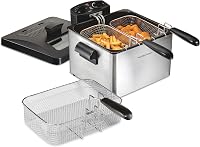
The Hamilton Beach 4.5 L Professional Style Deep Fryer has an adjustable dial from 265°F to 375°F and a ready light, so you can hold wings at the top of that range. An 1800 watt immersed element is what recovers heat quickly after you add cold wings.
Lower oil means slower cooking and greasier wings. If your fryer's maximum is below 350°F, extend the frying time slightly and check the internal temperature rather than guessing.
Watch the oil level against the marked line as you load the basket, because a fryer with only a thin layer of oil will struggle to hold its heat once cold chicken goes in. A 4.5-liter oil capacity like the Hamilton Beach's gives you depth to spare, which is why it holds temperature better than a shallow pan on the stove.
Which basket setup works for wings?
The Hamilton Beach model gives you a 12 cup basket or two 6 cup frying baskets. Two baskets let you keep a small batch in each and pull one while the other keeps going.
For wings, the pair of smaller baskets is the more useful arrangement, since each one holds a modest load that won't drag the oil down.
How many wings should you fry at once?
Fry in batches that leave the basket loose, not packed. Crowding drops the oil temperature and the wings end up pale and oily.
Fill no more than about half the basket with wings and keep them in a single layer where possible. Wait for the oil to come back to temperature between batches, which the ready light helps you judge.
A crowded basket also makes the wings stick together, and pulling them apart mid-fry tears the skin and lets oil into the meat.
How long do you fry chicken wings?
Cook wings for about 10–15 minutes at 350–375°F, then check the thickest part with a thermometer. They're done at 165°F internal, and that number decides the timing, not the clock.
Larger drumettes take longer than thin flats. Pull finished pieces out as they hit temperature and rest them on a rack while the rest cook.
If a batch is browning fast on the outside but still reads under 165°F at the bone, lower the dial a little and give it another few minutes rather than turning the heat up.
The Hamilton Beach's chrome-plated baskets hook over the oil pot to drain excess oil. That drip step matters, so give each batch a minute or two above the oil before moving on.
Skipping the drip means the wings sit in fat and the crust softens before it ever reaches the sauce bowl.
Should you sauce wings before or after frying?
Sauce after frying and draining, never before. Sugar in most wing sauces burns quickly in hot oil and turns the coating bitter.
Let the wings rest for a minute or two so they stop steaming, then toss them in sauce in a bowl. A dry seasoning or rub works just as well, and some cooks like to toss in a little cornstarch before frying for extra crunch.
Serve promptly while the skin is still crisp. If you're feeding a crowd, hold finished batches in a low oven on a rack rather than stacking them, which traps steam and softens the crust.
Sauce in small amounts and toss just before serving, since a wing that sits in sauce goes soft within minutes.
How do you keep the oil clean and the fryer safe?
Keep the lid down while frying, and strain the oil once it cools. A vented lid like the Hamilton Beach's view-window lid cuts splatter while letting you watch the color of the wings.
Fry with a breakaway cord in place so the fryer can't tip if someone catches the cable. Don't overfill the oil past the marked line, and never leave hot oil unattended.
Once the oil is cool, strain it into a sealed container so crumbs and food bits don't sour it. The Oggi Stainless Steel Grease Container holds 4 quarts, has a fine mesh strainer insert and a clamp-on lid that keeps used oil fresh for the next batch.
The strainer catches the breading and skin bits that would otherwise burn on the next fry, and the clamp-on lid seals in smells so the kitchen doesn't carry frying odor between batches. Keep the filled container out of direct light and away from heat.
When the oil smells off or turns dark, replace it rather than reusing it. For a fryer that suits wings specifically, our guide to the best deep fryer for chicken wings covers capacity and basket size in more detail.
How do you clean the fryer after wings?
Let the oil cool completely, then remove the basket and wash the parts your manual allows. Wing residue and breading settle at the bottom of the pot, so a full clean keeps the next batch tasting fresh.
The Hamilton Beach's oil pot, baskets and lid go in the dishwasher, and its removable heating element hand-washes in warm soapy water. That makes cleanup quicker than models with a fixed element.
Wipe the heating element gently rather than scrubbing it, since the surface is what transfers heat to the oil.
For stuck-on crumbs in the basket or along the pot, the Nuenen Fryer Cleaning Tool Set includes an L-shaped brush, a basket brush and a cleanout rod rated to 750°F. Long handles keep your hands away from hot surfaces.
The L-shaped head reaches the corners where breading collects, and the cleanout rod slips between the tubes at the bottom of the pot to break up hardened residue before it sets.
Check whether a deep fryer easy to clean fits your kitchen better if cleanup is your main concern. If you're shopping on a tighter budget, our roundup of the best deep fryers under 100 dollars covers smaller models that still handle wings.
The Presto GranPappy is another option worth comparing for simple wing batches. Its smaller format suits occasional frying rather than big game-day crowds.
What are the common mistakes when frying wings?
Adding wet wings, crowding the basket and frying too cool are the three mistakes that ruin a batch. Each one causes the same result: greasy, pale skin instead of a crisp shell.
Don't fry in oil that's smoking or above the fryer's top setting. Don't lift the lid constantly, since each opening drops the heat.
And don't skip the thermometer, because color tells you less about doneness than internal temperature.
Keep the wings cold until the moment they go in the basket. A cold, dry wing fries cleaner than one that's warmed to room temperature on the counter.
A fourth habit worth breaking is saucing too early or stacking hot wings in a bowl, which traps steam and undoes all the work the hot oil just did.
What's the takeaway for cooking wings in a deep fryer?
Dry wings, hot oil and small batches are the whole method. Set the fryer to 350–375°F, cook each batch to 165°F, drain on the basket over the pot and sauce at the end.
For most home kitchens, a 4.5-liter fryer with a temperature dial and multiple baskets covers wings and plenty more. Pick a larger model if you fry for a crowd, or a compact one if wings are an occasional treat.
Keep the oil strained and the basket brushed out, and the next wing night will be as crisp as the first. Start with a clean, dry batch and a fryer you trust to hold its temperature.
Frequently asked questions
What oil is best for deep frying chicken wings?
Any oil with a high smoke point works, such as peanut, canola or vegetable oil. Pick a neutral flavor so the wing sauce stays the star, and only fry in oil your fryer's manual allows.
How much oil should a deep fryer hold for wings?
You need enough oil to cover the wings fully, which means a fryer with a few inches of oil depth. A larger 4.5-liter model gives you room to fry a full basket without the oil foaming over.
Can you reuse the oil after frying wings?
Yes, once it cools. Strain out crumbs and bits through a fine mesh into a sealed container, then store it away from light.
Discard oil that smells off or has gone dark.