How to Fry Shrimp in a Deep Fryer
Heat oil to 350°F, pat the shrimp very dry, coat them in batter or breading, and fry in small batches for 2 to 3 minutes until golden. Drain on a rack, not paper, and salt right away.
On this page (10 sections)
- How to Fry Shrimp in a Deep Fryer
- What do you need before the shrimp goes in the oil?
- Why does drying the shrimp matter so much?
- How do you choose and heat the oil?
- How do you bread or batter shrimp for frying?
- How long do you fry shrimp and how many at a time?
- How do you keep the oil clean and safe?
- What goes wrong with fried shrimp?
- How does frying shrimp differ from frying chicken?
- The bottom line
How to Fry Shrimp in a Deep Fryer
Heat the oil to 350°F, pat the shrimp completely dry, coat them in batter or breading, and fry in small batches for 2 to 3 minutes until golden. Drain on a wire rack and salt immediately.
That's the whole method for how to fry shrimp in a deep fryer at home.
The hard part isn't the frying. It's keeping the oil at temperature and keeping the shrimp dry enough that the coating stays on.
Get those two things right and the rest is timing.
What do you need before the shrimp goes in the oil?
You need dry shrimp, a high-smoke-point oil, a coating, and a fryer that holds 350°F. A thermometer, a wire rack and tongs finish the kit.
Anything wet going into hot oil will spit.
Buy raw shrimp, peeled and deveined, or shell-on if you prefer to peel them yourself. Pat them with paper towels and leave them in the fridge until the oil is ready.
Pick peanut, canola or vegetable oil. These hold frying heat without smoking.
Fill your fryer between its minimum and maximum oil lines, never past the max.
Set up a landing area before you start: a rack over a tray and a bowl of salt. Once the first batch is out, you won't want to hunt for anything.
Why does drying the shrimp matter so much?
Water is the enemy of fried shrimp. A wet surface cools the oil on contact, which makes the coating slide off and the shrimp soak up fat.
Dry shrimp fry crisp and light.
Pat each shrimp on both sides and check the groove where the vein was. That seam holds water.
A brief rest on a clean towel pulls out the last of it.
If the shrimp came out of a frozen pack, thaw them fully in the fridge first. A quick rinse is fine, but dry them after.
Keep the shrimp cold while you work through the batch. Warm shrimp soften the coating and fry less evenly.
How do you choose and heat the oil?
Fill the fryer to its marked line and let the thermostat bring the oil to 350°F. Give it 10 to 15 minutes and confirm with a thermometer before the first shrimp goes in.
Every fryer heats a little differently. A signal light or a dial reading tells you the thermostat has done its job, but a clip-on thermometer tells you what the oil is actually doing.
Don't fry below 325°F. Shrimp cooked in cool oil turn greasy and pale.
Above 375°F the coating browns before the shrimp cooks through.
Keep the basket out of the oil while it heats. Lower it only when you're ready to load and fry.
How do the fryer choices in this guide handle the job?
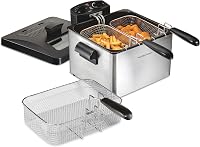
A dual-basket fryer is the easier choice for shrimp because you can fry one basket while the other drains. That keeps the oil temperature steadier across several batches.
The Presto Pro Fry holds a large enameled pot and two oblong baskets. The shape suits big pieces like chicken or fish, but it also gives shrimp plenty of room to float.
An 1800-watt immersion element preheats quickly and recovers after each batch. Its spatter-shield cover with charcoal filter cuts both splashing and fishy odor.
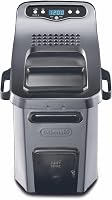
If counter space is tight, the Cuisinart 1.1 Quart Compact Fryer suits small households and snack batches. Its basket holds up to 3/4 pound and its diecast bowl keeps the oil at the temperature you set.
The smaller oil volume heats fast, though it also means smaller batches and less heat recovery.
Either way, keep batches small. Shrimp are light and cook quickly, but crowding the basket still drops the oil temperature.
How do you bread or batter shrimp for frying?
Choose one coating and keep it thin. A light dusting of flour or cornstarch gives a delicate crust.
A wet batter gives a thicker, puffier shell.
Breadcrumbs sit in between.
For flour: season the shrimp, toss them in cornstarch or flour, and shake off the excess. For batter: dip in a loose mix of flour, water and egg, letting the excess drip back into the bowl.
For breadcrumbs: flour, then egg, then crumbs, pressing lightly.
Whatever you choose, coat the shrimp just before they hit the oil. A coated shrimp sitting on a plate goes soggy on the bottom.
Flavor the coating with salt, pepper, paprika or garlic powder. A pinch of baking soda in a wet batter helps it puff.
How long do you fry shrimp and how many at a time?
Fry shrimp for 2 to 3 minutes at 350°F, in batches small enough that they float freely. They're done when the coating is golden and the shrimp curl into a C shape.
An overcooked shrimp curls into a tight O and turns rubbery. Pull them at the C.
Thin shrimp cook in closer to 2 minutes, jumbo in about 3.
Load the basket away from your face and lower it slowly. Drop shrimp in one at a time or in a loose scatter so they don't clump.
Let the oil climb back to 350°F between batches. That pause is what keeps the crust crisp and the shrimp from tasting of old oil.
Don't stack fried shrimp. Lay them in a single layer on the rack as they come out.
How do you hold fried shrimp warm without losing the crunch?
Hold them in a 200°F oven on a wire rack, uncovered. The rack lets air circulate and the low heat keeps them warm without steaming the crust.
Skip the foil cover. It traps moisture and softens the coating within minutes.
If you're serving right away, the rack on the counter is enough.
Salt each batch as it drains. The seasoning sticks to hot oil and won't cling once the shrimp cool.
Serve with cocktail sauce, lemon wedges or a tartar dip. A squeeze of lemon right before serving keeps the flavor bright.
How do you keep the oil clean and safe?
Skim the crumbs between batches and let the oil cool completely before you touch it. Hot oil is the main risk in this whole process.
Keep water, kids and pets away from the fryer while it's in use.
A fine skimmer or slotted spoon clears the burnt bits that would otherwise flavor the next batch. Do this after every couple of batches.
Never move a fryer full of hot oil. Let it cool in place, then handle the pot or bowl only when it's cold.
When the oil is cool, strain it into a sealed container. The Oggi grease container holds up to a gallon, with a fine mesh strainer insert that catches crumbs and a clamp-on lid.
It works for shrimp oil and for the fat from your next bird.
Discard oil that smells fishy or foams when reheated. Shrimp leave a strong flavor behind, so don't push a batch of oil past two or three uses.
What goes wrong with fried shrimp?
Most fried shrimp problems come down to temperature or moisture. Knowing the symptoms makes the fix obvious.
Greasy shrimp means the oil was too cool. Raise the heat and wait for it to recover.
Coating that slides off usually means the shrimp were wet or the oil was too cold.
Soggy crust after a few minutes points to covering them or draining on paper. Use a rack.
Burnt crumbs in the oil come from not skimming.
Rubbery shrimp means they cooked too long. Pull them at the C shape and trust the time.
How does frying shrimp differ from frying chicken?
Shrimp cook in minutes while chicken needs much longer at a lower temperature. Chicken has to reach a safe internal temperature, so it fries low and slow.
Shrimp are safe as soon as they're opaque and curled.
That's why you can fry shrimp at 350°F in 2 to 3 minutes but chicken needs more time and more attention. For the longer method, see our guide on how to fry chicken in deep fryer.
If chicken is your main fried food, a bigger basket helps. Our roundup of the best deep fryer for chicken wings covers the machines built for larger batches.
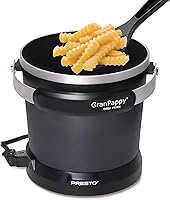
And if you're still choosing a fryer, the Presto GranPappy review covers a smaller, simpler option. Readers working to a budget can compare deep fryers under 100 dollars.
The bottom line
For anyone learning how to fry shrimp in a deep fryer, the method is short: dry shrimp, 350°F oil, light coating, small batches, 2 to 3 minutes, rack and salt.
Choose the Presto Pro Fry if you'll fry often and want two baskets and a splatter shield. The Cuisinart compact is the pick for small kitchens and snack-sized batches.
Add the Oggi container if you plan to reuse the oil.
Start with the oil at 350°F, keep the shrimp dry, and don't crowd the basket. That's how you get the light, crisp shrimp that make the fryer worth pulling out.
Frequently asked questions
What oil is best for frying shrimp?
Use an oil with a high smoke point, such as peanut, canola or vegetable oil. These hold 350°F without breaking down.
Skip olive oil and butter, which smoke and burn at frying temperatures.
How do you keep fried shrimp crispy?
Drain them on a wire rack over a tray so air reaches the underside, and salt as soon as they come out. Paper towels trap steam and soften the crust.
Serve within a few minutes, or hold them in a 200°F oven on a rack.
Why did my fried shrimp turn out greasy?
Oil that is too cool is the usual cause. At 350°F the coating seals fast and sheds oil, but below about 325°F it soaks it up.
Crowding the basket also drops the temperature, so fry a few at a time and let the oil recover.
Can you reuse the oil after frying shrimp?
Yes, once it has cooled. Strain out the crumbs, which burn on the next batch.
Store the oil in a sealed container away from light.
Discard it when it smells fishy, looks dark, or foams when heated.