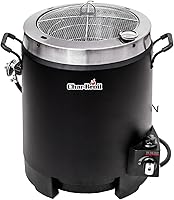
What Size Turkey Fits in a Deep Fryer?
For most fryers the safe bird is 12 to 14 lb in a 26-quart pot and 14 to 16 lb in a 30-quart pot, and 20 lb is the ceiling on a large 10-liter electric fryer. Stay under the maker's weight and quart limits, keep oil 2 to 3 inches above the bird, and never fill the pot past the marked line.
On this page (9 sections)
- What size turkey fits in a deep fryer by pot capacity?
- Why oil depth matters more than the turkey's weight
- What size turkey fits in an electric deep fryer?
- What size turkey fits in a propane turkey fryer?
- How do you check whether your turkey will fit?
- Which accessories help a turkey fit safely?
- Does the turkey's shape change what fits?
- How long does a turkey take to fry at each size?
- Which size should you choose?
The turkey size that fits your deep fryer depends on the pot's oil capacity and the weight limit the maker prints. As a general rule, a 26-quart pot takes a 12 to 14 lb bird, a 30-quart pot takes a 14 to 16 lb bird, and a large 10-liter electric fryer rated for it can handle up to a 20 lb turkey.
Anything bigger risks poor cooking and spilled hot oil.
Weight alone does not tell the whole story. The shape of the bird, the basket it sits in and how far the oil rises when you lower it all change whether a turkey truly fits.
This guide works through the math for common fryer sizes. It also shows which accessories help and what to do when your bird is close to the limit.
What size turkey fits in a deep fryer by pot capacity?
Match the bird to the pot in quarts first, then check the maker's weight limit. Oil capacity is the real constraint, and a rough rule of thumb is 1.4 to 1.5 quarts of oil per pound of turkey in a traditional fryer.
A 30-quart fryer therefore suits a bird in the 14 to 16 lb range once you leave headroom for bubbling.
The reason is simple. Oil expands and foams as the turkey goes in, so the pot cannot be filled to the brim.
A 30-quart pot filled to a safe line holds less oil than its full volume suggests. That gap between full volume and usable oil is where most size mistakes happen.
| Pot capacity | Typical turkey size | Best for |
|---|---|---|
| 10 quarts | 10 to 12 lb | Small gatherings, electric countertop fryers |
| 26 quarts | 12 to 14 lb | Smaller holiday meals on a propane burner |
| 30 quarts | 14 to 16 lb | Standard propane turkey fryer sets |
| 10 liters (about 10.6 quarts) electric | Up to 20 lb when rated | Large birds on a rated electric fryer |
The numbers overlap because makers rate their pots differently. Two 30-quart fryers from different brands may publish different bird limits, so the pot's own label beats a generic chart.
A maker who builds in more headroom can rate a bigger bird in the same quart size. An electric fryer rated for 20 lb uses less oil for the same bird than a traditional pot, so its smaller quart size does not rule out a bigger turkey.
Run the math both ways before you decide. If your bird weighs 15 lb and your rule gives 21 to 23 quarts of oil, a 26-quart pot leaves little spare room once foam rises.
The same bird in a 30-quart pot has a safer margin.
Pick the smaller bird when you are between sizes. A 15 lb turkey that fits with clearance cooks better than a 17 lb bird wedged against the oil line.
Check your fryer's manual for the maker's stated limit and start there.
Why oil depth matters more than the turkey's weight
A turkey fits only when the oil covers it with 2 to 3 inches to spare and the pot still has room below the rim. Weight matters, but oil depth decides whether the bird cooks evenly or leaves a raw pocket near the breast.
When you lower a turkey into hot oil, the level rises fast. If the bird is too large for the oil volume, the top of the breast sits above the surface and never fries.
That leaves an uneven bird and makes timing guesses unreliable. A bird that pokes above the oil also cooks partly by hot air, which browns the skin before the meat is done.
Measure before you cook. Place the turkey in the empty pot, add water until it covers the bird by about 2 inches, then lift the turkey out.
The water line tells you the oil line you need. Dry the pot fully before adding oil.
Any water left behind will spatter when the oil heats.
The water test also settles the quart question for your exact bird. Two turkeys of the same weight can need different oil volumes if one is taller or broader.
Trust the mark on your own pot over any chart.
Leave a clear gap of at least 2 to 3 inches below the rim. Hot oil foams hard when cold or wet food goes in, and that gap is your safety margin.
If the water test reaches too close to the top, size down.
What size turkey fits in an electric deep fryer?
Electric fryers rate birds by pot capacity, and the largest models take more than most people expect. The Masterbuilt 10 L XL is rated to fry a turkey up to 20 lb, which makes it the option to compare against when you want a big bird without a propane burner.
The Masterbuilt combines frying, boiling and steaming in one 10.6-quart stainless steel pot. Its magnetic breakaway cord is a safety feature for a fryer that often sits on a counter or patio table.
If the cord catches on something, it pulls free instead of dragging the hot pot.
Its oil capacity is 10 liters, and Masterbuilt says the design needs 1.3 times less oil than a traditional deep fat fryer. That smaller oil load heats faster and is easier to store afterward.
A removable hinged lid and built-in drain valve make cleanup easier after the bird comes out. The valve lets you empty oil or water without tipping a heavy pot.
The drain clips and cooking basket with a lifting hook help you manage the bird safely. Those accessories take space in the pot, so allow for them when you judge the fit.
The basket walls also set a limit on how wide the bird can be.
The unit runs at 1650 watts and measures 16.5 inches deep by 18.4 inches wide by 14.8 inches tall. That footprint matters if you plan to use it indoors or on a covered patio.
At 20.5 pounds empty, it is light enough for one person to move when cool. Masterbuilt backs it with a one year limited warranty.
Because it fries, steams and boils, the same pot can handle a crawfish boil or a batch of steamed mussels when turkey season is over. That versatility is the reason to pick a 10-liter electric over a single-purpose fryer.
Choose this size for a 16 to 20 lb holiday bird when you want the convenience of an electric fryer. For smaller birds, a 10 to 12 lb turkey leaves plenty of clearance and cooks faster.
If you are weighing electric against propane, read our guide on whether you can fry a turkey in an electric deep fryer. It covers the capacity and safety trade-offs in more depth.
Our Masterbuilt XL electric turkey fryer review looks at the same model in detail.
What size turkey fits in a propane turkey fryer?
Propane sets usually pair a 26 to 30-quart pot with a burner, and those pots suit birds in the 12 to 16 lb range. The GasOne 30QT set uses a 30-quart stockpot, so plan on a turkey near the 14 to 16 lb mark for a comfortable fit.
The set includes the propane cooker, regulator and hose kit, large stockpot with perforated basket, thermometer, marinade injector and turkey rack. The alloy steel and aluminum frame with a cast iron burner head is built for outdoor use.
The whole kit arrives as one package, so you are not hunting for a basket or thermometer on the day of the cook.
A steel braided heat resistant hose with an adjustable regulator helps keep gas pressure steady. That matters for a long cook when you need a clean blue flame from start to finish.
An air controller on the burner lets you adjust the mix for a smooth burn.
The 30-quart capacity leaves room for a modest bird plus the basket and rack inside. A 16 lb turkey fits with care, but a 20 lb bird crowds this pot and sits too close to the oil line.
The included thermometer helps you hold the oil near 350°F so the outside does not brown before the center cooks.
The frame measures 15 inches deep by 15 inches wide by 22 inches tall. That height keeps the pot up off the ground for easier lifting and a safer stance when you lower the bird.
The set is easy to store between holidays because the pot and burner break down.
Pick this size for a backyard holiday crowd when you have outdoor space and want the classic propane setup. For a smaller gathering, size down to a 12 to 14 lb bird and the cook gets simpler.
Our roundup of the best propane turkey fryers compares more sets if you want options beyond this one.
How do you check whether your turkey will fit?
Test the fit with water before you buy oil. The water displacement method tells you both the oil volume you need and whether the bird clears the rim safely.
It costs nothing and takes a few minutes.
Here is the sequence to follow.
- Put the turkey in the empty pot, still in its packaging or well dried.
- Add water until the bird is covered by about 2 inches.
- Mark the water level, then lift the turkey out.
- Measure the depth from the mark to the rim. If it is less than 3 inches, the bird is too big for safe frying.
- Dry the pot completely and fill with oil to your mark.
The water line you find is the oil line to use. Do not simply fill the pot to a printed maximum if your bird is smaller, because extra oil only adds splatter risk.
Too much oil also takes longer to heat and is harder to cool and store.
Use the rack or basket you plan to cook with during the test. It changes the bird's height in the pot and can push the oil level up.
A rack that holds the turkey upright makes the footprint smaller and the fit more predictable. Skip this step and your mark will be wrong by the height of the rack base.
Repeat the test if you change birds. A 14 lb bird one year and a 20 lb bird the next need different oil lines in the same pot.
Write the mark on a note so you do not have to redo the test each holiday.
Which accessories help a turkey fit safely?
A good rack does more than hold the bird. A vertical stand keeps the turkey upright, so a wide bird takes less horizontal space and the oil covers it more evenly.
The Geesta kit is made from 430 stainless steel and assembles to about 9.84 x 9.84 x 14.45 inches. Geesta says the vertical structure and perforated base help the turkey heat evenly and keep the bottom from burning.
The perforated base lets oil reach the underside of the bird instead of trapping it against a flat pan.
The large base gives the bird stable support and resists tipping. A lifter hook is included, along with a drip pan base, bolts and a user manual.
The hook gives you a firm grip when the bird goes in and comes out. Assembly takes only a few minutes and needs no extra tools.
It is built to hold a turkey up to 20 lb. The stainless steel is easier to clean than aluminum and can go in the dishwasher.
Food grade stainless also resists rust and corrosion, so it holds up to repeated holiday use. Geesta lists a 24-month warranty on the kit.
The 1.3 pound rack is light enough to lift out with the bird still on it. The assembled height of about 14.45 inches matters most, because a tall rack raises the bird toward the oil line.
Check that height against your pot depth before you buy. Geesta advises measuring your pot first, since the rack fits most turkey fryer pots but not all.
Choose a vertical rack when your pot is wide and shallow, or when the bird tends to slide around. Measure your pot first, because a rack that is too wide will not sit flat on the bottom.
A rack that wobbles is worse than no rack at all.
Does the turkey's shape change what fits?
Yes. A long, narrow bird and a short, round bird of the same weight take up different space, so two 15 lb turkeys can fit your fryer differently.
A broad-breasted turkey is wider across the chest, which matters in a round pot with a basket. A vertical rack helps here because it turns the bird on end and reduces the width it occupies.
The same bird that crowds a basket lying flat may clear it on a stand.
Weight still sets the cooking time and the oil volume you need. Shape only changes how the bird sits and how much clearance you have around it.
If your pot is tight, look for a slimmer bird or use a rack to stand it upright. A bird with long legs and a narrow body settles into a basket more easily than a broad one.
Measure the bird's widest point against the inside of your basket or pot before you commit. A turkey that touches the basket walls will not fry evenly and is hard to lift out.
Contact with the basket also blocks oil flow around that spot, which can leave the skin pale and soft.
How long does a turkey take to fry at each size?
Cooking time scales with weight, at roughly 3 to 4 minutes per pound in oil at about 350°F. A 14 lb bird takes about 42 to 56 minutes, while a 20 lb bird takes about 60 to 80 minutes.
A 16 lb bird lands in between, at roughly 48 to 64 minutes.
Keep the oil temperature steady and check the internal temperature in the thickest part of the thigh. Timing is a guide, not a guarantee, because oil temperature and bird shape both affect the result.
A bird that sits partly above the oil needs longer, and the skin may brown before the meat catches up.
Larger birds need more oil and a longer cook, which makes the size decision matter for both fit and schedule. Plan your fryer around the bird you expect to cook most years, not just one holiday.
A 20 lb bird in a 30-quart propane pot may fit on paper but leave too little oil headroom for a safe cook.
Rest the turkey before carving and keep a fire extinguisher rated for oil fires nearby. Outdoor frying on a propane burner should always happen away from the house and garage.
Keep kids and pets back from the burner for the whole cook.
Which size should you choose?
Buy for the biggest bird you will realistically fry, then keep a safety margin. A 10-liter electric fryer rated to 20 lb covers large family birds, while a 26 to 30-quart propane pot suits a 12 to 16 lb turkey for a backyard cookout.
If you cook for a crowd every year, size up to a rated 20 lb electric fryer like the Masterbuilt. If you want the classic outdoor setup, a 30-quart propane set handles a 14 to 16 lb bird well.
For most people asking what size turkey for deep fryer pots works, the answer is 14 to 16 lb in a standard 30-quart fryer. Add a vertical rack and run the water test before oil goes in.
That combination keeps the bird covered, the oil below the rim and the cook predictable.
Frequently asked questions
What size turkey fits in a 30-quart fryer?
A 30-quart pot typically takes a turkey up to about 14 to 16 lb once you leave room for oil and bubbling. Stay well under the brim so hot oil does not spill over, and follow the weight limit the maker prints for that pot.
How many quarts do I need for a 20-pound turkey?
Plan on roughly 1.4 to 1.5 quarts of oil per pound of bird in a traditional pot, so a 20 lb turkey needs a large oil volume plus headroom. A large 10-liter electric fryer rated for a 20 lb turkey is the practical fit for that size, since its design needs 1.3 times less oil than a traditional fryer.
What size turkey for deep fryer should a beginner choose?
Start with a 12 to 14 lb bird. It cooks faster, is easier to lower into the oil, and leaves more clearance in the pot, which matters when you are learning the timing and oil depth for the first time.
Can a turkey be too big for the fryer pot?
Yes. If the bird sits above the oil line or crowds the basket, the top will not cook evenly and the oil can boil over when it goes in.
Pick a smaller bird or a larger pot rather than forcing the fit.
How much oil does a turkey fryer need for a 15-pound bird?
Budget about 21 to 23 quarts of oil for a 15 lb turkey in a traditional pot, then check the fill line on your pot. You only need enough oil to cover the bird with a couple of inches to spare, not to fill the fryer to the top.
Does the turkey weight limit include the basket and rack?
No. The maker's turkey weight limit covers the bird, while the basket, rack and lifting hook are separate accessories that take up room in the pot.
Account for their space when judging oil depth and clearance.