Deep Fryer vs Dutch Oven: Which Is Better? (November 2026)
Pick a dedicated deep fryer for crisp results with steady heat and less splatter, or a Dutch oven if you want one heavy pot that fries, braises and bakes. In a deep fryer vs dutch oven comparison, the deciding factors are how often you fry and how much stove space and cleanup you'll trade for versatility.
On this page (10 sections)
- Deep fryer vs Dutch oven: which should you buy?
- Dedicated deep fryer vs Dutch oven: side by side
- Which one holds the oil temperature better?
- How much food can each one fry at once?
- Which is easier to clean after frying?
- Which is safer to fry in?
- Which one is more versatile in the kitchen?
- Who should buy a dedicated deep fryer?
- Who should buy a cast iron Dutch oven instead?
- Deep fryer vs Dutch oven: the verdict
Pick a dedicated deep fryer for crisp results with steady heat and less splatter, or a Dutch oven if you want one heavy pot that fries, braises and bakes. In a deep fryer vs dutch oven comparison, the deciding factors are how often you fry and how much stove space and cleanup you'll trade for versatility.
The fryers here bring a thermostat, a basket and a lid to a job the Dutch oven does with heat mass and a heavy lid. That difference shapes the oil, the mess and the counter or stovetop space each one needs.
If fries and chicken tenders are a weekly habit, a countertop fryer is the cleaner tool. If frying is an occasional side job for a pot that also makes stew and bread, the Dutch oven earns its shelf space.

Deep fryer vs Dutch oven: which should you buy?
Buy a deep fryer for frequent frying and a Dutch oven for occasional frying plus braising, baking and camp cooking. The deep fryer wins on heat control and cleanup; the Dutch oven wins on versatility and durability.
The dedicated fryer holds oil at a set temperature and lifts food out in a basket. A cast iron Dutch oven holds heat well and moves from stovetop to oven or campfire, but you manage the oil temperature and the splash yourself.
Frequency is the first question. Frying more than twice a month points to a dedicated fryer, because the oil storage and filtering features save time every session.
Frying a few times a year points to the Dutch oven, since it earns its keep with other meals.
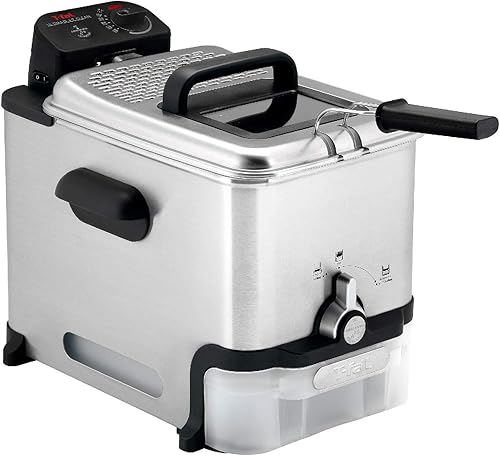
Storage matters too. The T-fal measures 18.3 inches deep by 13.7 inches wide by 14.8 inches tall and weighs 5.6 kg, so it needs a clear counter run or a cupboard.
A Dutch oven sits on the stove or in the oven and often stays there between meals. The Best Choice 6-quart pot weighs 14 pounds and has dual side handles for lifting it from range to oven to grill.
The Lodge camp oven adds three integral legs and a bail handle, so you carry it rather than slide it.
Our deep fryer buying guide covers the fryer types, sizes and safety details worth checking before you commit to a countertop unit.
Dedicated deep fryer vs Dutch oven: side by side
The fryer is an appliance with built-in temperature control, a basket and a lid; the Dutch oven is a heavy pot you heat from outside. The table shows where each one fits.
| Feature | Dedicated deep fryer | Cast iron Dutch oven |
|---|---|---|
| Heat control | Thermostat set to 300F to 375F | You control the stove or coals |
| Oil storage | Sealed oil box on filtration models | Oil stays in the pot |
| Lifting food | Basket with a handle | Tongs or a spider strainer |
| Splatter | Locking or vented lid | Open pot, or a lid that traps steam |
| Capacity | 3.5 L to 4.5 L oil | 6 to 8 quarts |
| Other uses | Frying only | Frying, braising, baking, camp cooking |
| Cleaning | Remove basket, bowl and oil box | Hand wash the whole heavy pot |
The oil capacity gap matters more than it looks. A 3.5-liter fryer like the T-fal holds enough for a family batch but not a whole turkey, while the 8-quart Lodge camp oven holds a much bigger load of oil for outdoor frying.
Each fryer also has its own basket style. The T-fal pairs one basket with a locking lid and viewing window.
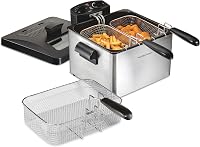
The Hamilton Beach includes three baskets, a 12-cup basket and two 6-cup baskets that hook over the oil pot to drain. That hook-over drain is a small thing that saves counter space when a batch comes out hot.
Which one holds the oil temperature better?
The dedicated fryer wins on steady, repeatable heat; the Dutch oven needs a thermometer and more attention. A thermostat removes guesswork that cast iron on a burner leaves to you.
The T-fal adjusts from 300F to 375F and its 1700-watt element recovers heat quickly after food goes in. The Hamilton Beach dial runs 265F to 375F with an 1800-watt immersed element and a ready light that tells you when the oil is at temperature.
A Dutch oven has no dial. Cast iron holds heat well, so oil rebounds slowly after a cold batch, but you read the temperature with a clip-on thermometer and adjust the burner.
That works well for one careful batch of chicken and gets tiring for four.
Why fryer thermostats matter for crisp food
Oil that runs too cool soaks into batter and leaves greasy food. Oil that runs too hot browns the outside before the middle cooks.
A thermostat holds the range where both problems stay small.
The Best Choice enameled Dutch oven is rated to 480F for oven use. That heat rating tells you the pot tolerates high heat; it doesn't set the oil temperature for you, so a thermometer still earns its place beside the stove.
How the fryer's temperature range compares
The T-fal covers 300F to 375F. That window leaves out the low end some cooks use for gentle frying and the very top some recipes call for.
The Hamilton Beach runs wider, 265F to 375F, so it reaches lower temperatures for delicate items while topping out at the same high mark. A Dutch oven goes as high or low as the burner and coals allow, but the cook sets and watches that heat.
For a fryer buyer the practical read is simple: a narrower band like the T-fal's suits fries, tenders and battered fish, while the Hamilton Beach's wider dial gives you more room for low-temperature frying.
How much food can each one fry at once?
The Dutch oven holds more oil and more food per batch, but the fryer makes better use of a smaller load. Match the batch size to how many people you feed at once.
The T-fal has a 3.5-liter oil capacity and 2.65 pounds of food volume, enough for a family meal. The Hamilton Beach runs 4.5 liters and 19 cups of oil, with three baskets so you can fry two foods at the same time.
The Lodge camp oven holds 8 quarts. That is more than either fryer, which is why it suits large outdoor batches and why 19.4 pounds of cast iron makes it a stay-put pot.
Family batches vs party batches
For a household of four, a 3.5-liter fryer covers fries and chicken in one or two rounds. For a party or a fish fry, the 8-quart Lodge and the 4.5-liter Hamilton Beach spread the work across fewer rounds.
A 6-quart enameled Dutch oven sits in between. It fries a solid family batch and still works for stew the next night, which is the reason many cooks keep one.
The Best Choice pot measures 11.25 inches across and 7.5 inches tall, so it fits on a range burner without hanging over the edge.
Which is easier to clean after frying?
The dedicated fryer is easier to clean, because the oil drains into a sealed container and the basket lifts out. A Dutch oven means pouring off hot oil and washing a heavy pot by hand.
The T-fal's filtration system filters and stores oil in a sealed container after the cook. Its basket, bowl, lid and oil box come apart for cleaning.
The Hamilton Beach heating element is removable and hand wash only, while its oil pot, baskets and lid go in the dishwasher.
With a Dutch oven, you let the oil cool, pour it into a container and wash the pot by hand. The Best Choice and the Lodge both call for hand washing.
Bare cast iron also needs drying and a light oiling so it doesn't rust.
Oil reuse and disposal
Fryer filtration stretches how long oil lasts. The T-fal stores filtered oil sealed between sessions, which cuts waste and keeps the kitchen from smelling of old oil.
That sealed oil box also means you aren't decanting a full pot into jars on fry night.
Dutch oven frying usually means oil is used once or twice and then discarded. That's fine for occasional frying and less efficient for a weekly fry night.
The Hamilton Beach holds 4.5 liters, so each change costs more oil than the T-fal's 3.5 liters.
Which is safer to fry in?
The dedicated fryer is safer for indoor frying because its lid contains splatter and its thermostat limits overheating. A Dutch oven on a burner leaves more of the safety work to you.
The T-fal has a locking lid with a viewing window, cool-touch handles and automatic shut-off. The Hamilton Beach has a vented lid, a viewing window and a breakaway cord that releases if the cord snags.
A Dutch oven is an open pot on a hot burner. Splatter reaches the stove and the floor, and you handle hot oil with tongs rather than a basket handle.
That's manageable with care and less contained than a fryer lid.
Frying outdoors with cast iron
The Lodge camp oven is built for coals, with a flanged lid that holds heat above and legs that space it over the fire. That keeps hot oil outside, away from cabinets and counters.
The lid also inverts and works as a griddle, and the bail handle lets you hang the pot from a tripod or lift it off the coals.
Outdoor frying suits big batches and strong smells. Our comparison of an oil-less turkey fryer vs deep fried turkey covers how the outdoor options differ when you move beyond fries.
Which one is more versatile in the kitchen?
The Dutch oven wins on versatility, because it fries, braises, bakes and goes to camp. A dedicated fryer does one job and does it well.
The Best Choice 6-quart enameled pot works on gas and electric ranges, in the oven to 480F and on the grill. The Lodge adds campfire legs and an inverted lid that works as a griddle.
Both handle stew, bread and roasts between fry nights.
A deep fryer only fries. That's the trade: you give up oven braises and bread baking in exchange for steady oil temperature, a basket and contained splatter.
The Hamilton Beach's dishwasher-safe pot and lid ease the cleanup half of that trade.
If you want a fryer that also filters and stores oil, the T-fal vs All-Clad deep fryer comparison shows how two countertop models differ on those features. For fryer-versus-fryer shopping, the Presto vs Hamilton Beach deep fryer breakdown covers two popular countertop choices.
Who should buy a dedicated deep fryer?
Buy a dedicated fryer if you fry at least twice a month and want crisp, repeatable results indoors. It suits families who make fries, tenders, onion rings and fish on a regular schedule.
The T-fal is the pick for most kitchens. Its 3.5-liter pot and 2.65-pound food volume cover a family meal, the thermostat holds 300F to 375F, and oil filtration makes the after-cook cleanup shorter.
The stainless steel exterior and cool-touch handles round it out for everyday use.
The Hamilton Beach is the pick for bigger households and party cooks. Its 4.5-liter oil capacity and three baskets let you fry two foods at once, and the breakaway cord and vented lid make indoor frying less messy.
Its 1800-watt element also recovers heat faster after a cold batch goes in.
Who should buy a cast iron Dutch oven instead?
Buy a Dutch oven if you fry occasionally and want the pot to earn its keep with stews, bread and camp meals. It suits cooks with limited storage who want one heavy pot instead of a single-use appliance.
The Best Choice 6-quart enameled pot is the pick for a home kitchen. The enamel interior wipes down easier than bare iron, the pot is rated to 480F for oven use, and 6 quarts fries a family batch without taking over the counter.
The enamel exterior also makes it the better-looking pot to leave out.
The Lodge 8-quart camp oven is the pick for outdoor frying. The flanged lid holds coals above and below the pot and the legs space it over the fire.
At 19.4 pounds it stays put, so plan where it lives. It arrives pre-seasoned and its lid doubles as a griddle, which stretches its use past fry night.
Deep fryer vs Dutch oven: the verdict
For most people who fry regularly, the deep fryer wins, and the T-fal Deep Fryer with Basket is the best pick. Its thermostat, basket and oil filtration turn a messy job into a repeatable one, and 3.5 liters covers a family meal.
Choose the T-fal for everyday frying. Choose the Hamilton Beach if you cook for crowds and want three baskets and more oil.
Choose the Best Choice 6-quart if you want one pot for frying and oven braises. Choose the Lodge 8-quart if you fry outdoors over coals.
The deep fryer vs dutch oven question really asks how often you fry and how much storage you have. Fry often and want less mess: buy the fryer.
Fry rarely and want one pot for everything: buy the Dutch oven. Our deep fryer buying guide helps you size the fryer once you decide.
Frequently asked questions
Is a deep fryer better than a Dutch oven for french fries?
A dedicated deep fryer is better for french fries because its thermostat holds a steady 300F to 375F and its lid and basket cut splatter. A Dutch oven can fry well on a stove, but you have to watch the oil temperature yourself and there is no basket to lift the food out.
Can you deep fry in a cast iron Dutch oven?
Yes, cast iron Dutch ovens handle high heat and hold oil temperature well. Fill the pot no more than about one-third full so hot oil has room to bubble, and use a clip-on thermometer to keep the oil near 350F to 375F.
How much oil does a Dutch oven need for frying?
You need enough oil to cover the food by about an inch without filling the pot more than a third of the way. That means about 2 quarts in a 6-quart Dutch oven, which is more oil than many small countertop fryers use.
Do you need a lid to deep fry safely?
A lid helps contain splatter, but it also traps steam that softens crust. A vented lid with a viewing window, like the one on the Hamilton Beach, is the safer compromise, while Dutch oven frying usually works uncovered.