Deep Fryer Buying Guide: Types, Sizes and Safety
The right deep fryer depends on where you cook, how much food you make at once, and how much space you have. Compare countertop electric, larger electric and outdoor propane models, then check the maker’s manual for setup and use.
On this page (8 sections)
The right deep fryer buying guide starts with where you’ll cook, how much food you make at once, and how much space you have. Countertop electric fryers suit indoor batches, larger electric models can add cooking functions, and propane fryers are for outdoor use.
Choose capacity around your usual meal, not an occasional oversized plan. Before buying, measure the storage spot and read the manual for placement, assembly, operation and cleanup instructions.
This guide compares common fryer types, sizing questions, practical features and safe setup. For a closer look at household capacity, see what size deep fryer you need.
Which type of deep fryer fits your cooking?
Electric fryers suit indoor cooking where their manuals allow it, while propane fryers in this guide are for outdoor use. Choose based on where you plan to cook and what you want to make.
| Fryer type | Consider it for | Check before choosing |
|---|---|---|
| Countertop electric | Indoor batches of fries, tenders, vegetables or seafood | Capacity, counter space, basket setup and cleanup |
| Larger electric fryer | Bigger cooking tasks or fry, boil and steam functions | Pot capacity, footprint, storage and manual instructions |
| Outdoor propane fryer | Outdoor gatherings and larger pots | Outdoor-only wording, stable setup, fuel arrangement and manual |
| Oil-free turkey fryer | Cooking turkey without a pot of deep-frying oil | Cooking method, turkey capacity and maker’s directions |
A fryer’s fuel type affects where it can be used. The VEVOR propane model is designed for outdoor use only, so keep it outside.
Some electric models also handle other cooking methods. The Masterbuilt 10 L model is a fryer, boiler and steamer, so it may suit households that want one appliance for several tasks.
For a focused comparison of the two main fuel types, read propane vs electric deep fryers. If turkey is your main reason for buying, our turkey fryer buying guide compares electric, oil-free and propane approaches.
How much capacity do you need?
Choose capacity for your normal batch size and cooking routine, then check each model’s stated capacity and food guidance. A fryer’s pot or oil volume does not guarantee a specific batch size.
Small countertop models can work for snacks, sides and meals for a few people. Larger electric or outdoor setups may suit bigger batches, but they also take more room to use and store.
Ask yourself:
- How many servings do you typically cook at once?
- Do you fry one food at a time or several?
- Will you cook mainly weeknight meals or occasional group meals?
- Where will the fryer sit during use?
- Where will you store it after it cools and is cleaned?
Capacity terms can be confusing because a maker may describe pot volume, oil capacity or food capacity. Compare like with like, and use the manual’s fill and loading guidance rather than estimating from a headline number.
How do you choose a deep fryer size for your household?
Start with the largest batch you expect to cook regularly, then check the model’s stated capacity and basket arrangement. A larger fryer can be useful for family meals, but it may take up more counter or storage space.
A single large basket gives you one cooking area. Multiple baskets may let you separate foods or cook smaller batches at the same time, depending on the model’s instructions.
If you’re between two sizes, measure both models and compare their cooking setup. Our deep fryer size guide walks through household needs and space planning in more detail.
Which features matter most?
Prioritize features that affect your routine: batch handling, cleanup, controls and storage. A long feature list matters less than a setup you can place, use and clean as directed.
A removable basket can make it easier to lift food and let excess oil drain. Multiple baskets may help when cooking different foods, while a view window lets you monitor food without opening the lid.
Also consider how the fryer comes apart for cleaning. Removable parts, a drain valve or dishwasher-safe components can make cleanup more manageable, but follow the maker’s cleaning instructions for each part.
Controls and cords deserve a close look. A breakaway cord is designed to detach if snagged, and a magnetic cord is another feature found on some electric models; these features don’t replace careful placement and supervision.
What does the fryer’s capacity label tell you?
Capacity labels tell you a stated volume or amount, but they don’t all describe the same thing. Check whether the maker gives oil capacity, pot capacity or a specific food limit.
For example, Hamilton Beach gives a 4.5 L oil capacity and describes frying up to 12 cups of food. Masterbuilt describes a 10 L cooking pot and says the model can fry a turkey up to 20 lb.
Those figures apply to those models and aren’t interchangeable. Follow the manual for fill levels and food limits.
Four deep fryers for different cooking plans
These four models illustrate how features and capacity can match different needs. The products are ordered by score, with the highest score first.
Masterbuilt 10 L XL Electric Turkey Fryer
Best for fry, boil and steam functions, the Masterbuilt 10 L XL Electric Turkey Fryer suits buyers who want one appliance for several cooking methods. Masterbuilt says it can fry a turkey up to 20 lb and describes its cooking pot capacity as 10.6 qt.
It includes a drain valve, drain clips and a cooking basket with a lifting hook. The removable hinged lid and dishwasher-safe components may help with cleanup; follow the manual for which parts can go in the dishwasher.
The turkey limit is specific to this model. Confirm the maker’s limit and directions before buying or using any fryer for turkey.
Hamilton Beach 4.5 L Professional Style Deep Fryer
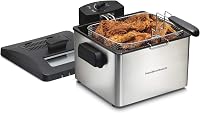
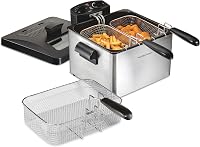
Best for flexible indoor batches, the Hamilton Beach 4.5 L Professional Style Deep Fryer has one 12-cup basket or two 6-cup baskets, a view window and a vented lid.
Hamilton Beach describes the oil pot, baskets and lid as dishwasher-safe, while the removable heating element should be hand-washed in warm soapy water. The fryer also has a breakaway cord.
Check its dimensions against your counter and storage space. Follow the manual for setup, use and cleaning.
Creole Feast 30 Qt Turkey and 10 Qt Fish Fryer Set
Best for a two-pot outdoor setup, the Creole Feast 30 Qt Turkey and 10 Qt Fish Fryer Set includes a 30 qt turkey pot and a 10 qt fish pot, along with a burner stand, hose and regulator.
The 10 qt pot is not intended for frying a whole turkey. The set also includes a turkey rack, lifting hook, marinade injector and thermometer.
Use it outdoors and follow the manual’s setup and cooking directions. Compare the included pots with the foods you plan to cook and the space available for storage.
VEVOR 16 Qt Double Burner Propane Fryer
Best for outdoor cooking with two tanks, the VEVOR 16 Qt Double Burner Propane Fryer has two tanks with a combined stated capacity of 4 gallons, and each tank has independent fire control.
VEVOR says this fryer is for outdoor use only. It includes two baskets, two lids, a thermometer and side tables; read the manual for assembly and operating instructions before use.
Measure the assembled setup and confirm you have a suitable outdoor location. Keep the fryer outdoors and follow all instructions for propane, oil and food preparation.
What should you check before buying?
Check dimensions, intended location, parts and manual guidance before choosing a fryer. These details affect whether you can set it up and maintain it as directed.
Use this checklist:
- Measure the use and storage areas. Include space for the appliance, its controls and the parts you remove for cleaning.
- Confirm the intended location. Follow the manual’s indoor or outdoor instructions, especially for propane models.
- Match the batch to the capacity. Check the maker’s stated food or turkey limit rather than guessing from pot volume.
- Review the basket arrangement. Decide whether one large basket or separate smaller baskets suit your cooking.
- Plan cleanup. Check which parts are removable, dishwasher-safe or meant for hand washing.
- Read the operating instructions. Look for assembly, fill limits, food preparation and shutdown directions.
Don’t assume a larger fryer will be easier to use. It may require more room for setup and storage, and its instructions may call for specific handling steps.
How do you plan for safe fryer use?
Follow the fryer maker’s manual for placement, setup, loading and operation. Hot oil and open flames need careful handling, and instructions can differ between electric and propane models.
Set up the fryer only in a location approved by its maker. Keep children and pets away from the cooking area, and don’t leave a fryer operating unattended.
For propane models, use them outdoors when the maker specifies outdoor-only use. Assemble the stand as directed, check the hose and regulator instructions, and keep the unit away from areas where a flame could create a hazard.
For electric models, check the manual’s guidance for the cord, outlet and placement. Keep the cord out of walkways, and don’t use a fryer with damaged parts.
Avoid overfilling the fryer or adding food in a way the manual prohibits. VEVOR warns not to fill above its Max Fill Line and calls for defrosting food before frying.
When you finish, follow the maker’s shutdown and cleanup directions. Let oil and parts cool as instructed before draining, washing or storing them.
For a dedicated checklist, see our deep fryer safety tips. If this is your first fryer, how to use a deep fryer for the first time explains why the manual should guide each step.
How should you clean and store a deep fryer?
Clean a fryer according to its maker’s instructions after it has cooled as directed. Removable parts and drains vary, so don’t assume every component can be washed the same way.
Some models have dishwasher-safe parts; others require hand washing for certain components. Check the manual before putting any part in water or a dishwasher, and keep electrical parts dry unless the instructions say otherwise.
Choose a storage spot before you buy. Make sure the fryer, baskets and lid can fit without blocking a walkway or forcing you to handle them while hot.
See our step-by-step guide to cleaning a deep fryer, basket and lid. For used oil, follow the steps in how to dispose of fryer oil at home.
Which deep fryer should you choose?
Choose a countertop electric fryer for indoor batches, a larger electric model if you want added cooking functions, or a propane set for outdoor cooking and larger pots. Then confirm its capacity, placement rules and cleanup instructions in the manual.
If household size is the main question, compare the examples in what size deep fryer you need. For other matchups, browse the deep fryer comparisons.
Sources
Frequently asked questions
What type of deep fryer is best for home use?
A countertop electric fryer suits regular indoor batches when its capacity fits your meals and you have room to use and store it. A larger electric model can add boiling or steaming functions, while propane fryers are for outdoor cooking.
Check the manual for placement and operating instructions.
How big of a deep fryer do I need?
Choose a fryer by the amount and type of food you cook at once, then compare usable capacity and the space needed around the appliance. A small batch fryer can suit snacks and sides, while a family-size or outdoor model may fit larger gatherings.
Capacity labels alone do not tell you how much food to load.
Can I use a propane deep fryer indoors?
No. The VEVOR propane fryer is designed for outdoor use only.
For indoor frying, compare electric models and follow their instructions for placement, operation and ventilation.
What should I check before using a deep fryer?
Read the model’s manual before setup, including where it may be used, how much oil or food to add, and how to operate its controls. Keep the fryer on a stable surface, keep children away, and follow the maker’s instructions for hot oil, cleanup and storage.
Is a larger deep fryer always better?
A larger fryer can handle more food or more cooking tasks, but it also needs more room for setup, use and storage. Choose capacity for your usual batch and occasional gathering, then measure the appliance footprint and check its manual for required clearances.