How to Use a Deep Fryer for the First Time
To learn how to use a deep fryer, start with a model that fits your kitchen and follow its manual for oil, setup, cooking, and cleanup. Prepare food carefully, use the fryer’s controls as directed, and let oil cool completely before handling it.
On this page (9 sections)
- How do you choose a deep fryer for your kitchen?
- What should you do before using a deep fryer?
- How do you fill and heat a deep fryer?
- How should you prepare and lower food?
- How do you remove food and cool the oil?
- Which accessories help with first-time frying?
- What mistakes should you avoid when using a deep fryer?
- How do you clean a deep fryer after its first use?
- How should you decide which fryer to use?
To learn how to use a deep fryer, choose one that fits your kitchen and the amount of food you usually cook. Read its manual before filling it, since oil limits, lid use, controls, and cleaning steps vary by model.
A countertop fryer is a contained way to cook crisp food in hot oil, but it needs a stable spot, careful loading, and time to cool afterward. Use the exact fryer’s instructions for temperatures and cooking times rather than guessing or borrowing directions from another model.
How do you choose a deep fryer for your kitchen?
Choose by cooking capacity, counter space, and how much cleanup you’ll accept. A compact fryer suits occasional batches, while a larger model with separate baskets can handle more food or two types at once.
The Hamilton Beach fryer holds 2 liters of oil and is sized for up to 6 cups of fries or chicken tenders. It suits a small household or someone learning with modest batches, especially if a viewing window and removable parts are useful; skip it if you routinely cook for a crowd.
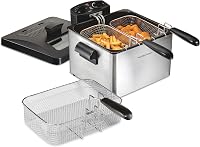
The Presto Pro Fry has a 4.7-liter oil capacity and dual baskets. Its larger oblong shape suits family-size quantities and foods such as chicken or fish; skip it if counter space or compact storage matters more than capacity.
For a closer look at fryer styles and sizes, use our deep fryer buying guide. If you are choosing between indoor cooking and backyard frying, compare propane and electric deep fryers.
What should you do before using a deep fryer?
Read the manual before adding oil or turning on the fryer. Confirm where it can sit, which parts to assemble, how it fills, and what the controls and indicator lights mean.
Set the fryer on a stable, level surface with clear space around it, following the maker’s placement directions. Keep it away from water, edges, and items that could catch or melt, and route the cord as instructed.
Wash removable parts only if the manual says they can be washed before first use. Dry them fully, then assemble them in the correct positions before adding oil.
How do you fill and heat a deep fryer?
Use the type and amount of oil specified in the manual, and follow any fill marks on the appliance. Too much or too little oil can affect operation, so don’t estimate from a different fryer.
Make sure the heating element and basket are installed as directed. Keep oil away from the fryer’s outside, controls, and power cord.
Set the controls as the manual explains and wait for the fryer’s ready signal, if it has one. A ready light tells you about the appliance’s heating cycle, but the recipe and fryer instructions still determine how to cook a particular food.
How should you use a fryer lid?
Use the lid only as the manual describes. Some designs allow covered cooking or let you raise the basket while the lid remains closed, which can help contain splatter.
Keep your face and hands away when opening a lid because hot steam may escape. Don’t assume every lid is meant to stay closed during cooking.
How should you prepare and lower food?
Prepare food according to the recipe and fryer instructions, then lower it using the approved basket or utensil. Pat wet foods dry when appropriate, and avoid adding food with excess water or loose ice.
Add food in batches if the manual or recipe calls for it. Overloading can disrupt cooking and make the fryer harder to manage, so leave room for the basket and food to move as intended.
Use only the included parts or utensils that the maker approves. Don’t reach into the fryer or improvise a way to move food while the appliance is on.
Can you put frozen food in a deep fryer?
Check the fryer manual and food package before frying frozen food. They may explain which foods are suitable and whether preparation is needed.
Remove loose ice or excess frost when directed. Water and ice can cause hot oil to splatter, so don’t put food in if moisture is likely to fall into the fryer.
How do you remove food and cool the oil?
Lift food out with the approved basket or utensil and let excess oil drain as directed. Keep the basket over the fryer only in the position allowed by the manual.
Turn off and unplug the appliance in the order specified by the maker. Let both the fryer and oil cool fully before moving, cleaning, or storing them.
Never carry or pour hot oil. Keep children and pets away while the fryer is running and while it cools.
Which accessories help with first-time frying?
Choose accessories for specific jobs: a fryer with clear controls for learning, a grease container for cooled oil, and gloves for suitable hot or greasy items. Accessories don’t replace the fryer’s instructions or make hot oil safe to touch.
Is the Hamilton Beach fryer a fit for a first-time cook?
The Hamilton Beach 8 Cup Deep Fryer suits a beginner who wants a ready light, adjustable temperature, and a viewing window. Its lid, heating element, and enamel-coated oil tank are removable for cleanup.
This is a sensible choice for smaller batches and a kitchen where removable parts matter. Check the manual for its oil fill, lid use, and cleaning directions, and don’t apply those directions to another model.
When might the Presto dual-basket fryer help?
The Presto Pro Fry suits cooks who want two baskets and extra capacity for larger meals. Its signal light indicates when oil is ready, and the heating element and enameled pot remove for cleaning.
Its larger footprint is a poor fit for a tight counter or someone who only fries small amounts. Follow its directions for oil and basket loading, including the stated 3½ to 5 quart oil range.
Where should cooled used oil go?
A grease container can hold oil after it has cooled completely. The Oggi container has a removable strainer and a lid, with capacity for up to 4 quarts.
Use a suitable container and follow local guidance on reuse or disposal. Read our guide to disposing of used fryer oil before deciding what to do with it.
Do heat-resistant gloves replace careful handling?
No, gloves don’t make hot oil safe to touch or pour. RAPICCA describes its gloves as oil-resistant, with a textured grip and a 14 in cuff, for cooking tasks such as handling hot or greasy items.
These gloves are not a reason to reach into the fryer or carry hot oil. Keep hands and clothing clear of the oil, and let fryer parts cool before handling them.
What mistakes should you avoid when using a deep fryer?
The common first-use mistakes are guessing the oil amount, overloading the basket, and handling oil before it cools. Follow the manual and recipe at each step instead of relying on memory from another appliance.
Avoid using a lid in a way the maker doesn’t allow, or opening it with your face close to the steam. Don’t add food covered in loose ice or excess water, and don’t leave a running fryer unattended.
Don’t wash electrical parts or pour oil into a sink. For safer routines, read our deep fryer safety tips.
How do you clean a deep fryer after its first use?
Unplug the fryer and wait until the oil and appliance have cooled before cleaning. Follow the manual for removing the basket, element, pot, lid, and any filters.
Clean only the parts and surfaces the maker says are washable. Keep water away from electrical parts and dry removable components before reassembly.
Our guide explains how to clean a deep fryer, basket, and lid. For more ideas about foods and tasks suited to a fryer, read what a deep fryer is used for.
How should you decide which fryer to use?
Pick the Hamilton Beach for smaller batches and beginner-friendly controls; choose the Presto if you need two baskets and more cooking capacity. Either choice still calls for careful setup, measured oil, and the model’s own instructions.
Use a grease container only after oil cools completely, and treat gloves as help for suitable cooking tasks rather than protection from hot oil. When you’re ready to fry, the safest routine is simple: set up as directed, load carefully, and clean only after everything has cooled.
Frequently asked questions
How do you use a deep fryer for the first time?
Read the fryer’s manual first, then set up and fill the appliance as the maker directs. Prepare food as instructed, lower it with the fryer’s approved method, and use the controls and lid only as described.
After cooking, let the oil cool before cleaning or storing it.
How much oil should I put in a deep fryer?
Use only the fill range in your fryer’s manual. The required amount differs by model, and too much or too little oil can affect operation.
Check the fryer’s markings if it has them, and don’t guess from another model’s instructions.
Should I put the lid on while deep frying?
Follow your fryer’s manual for lid use, since designs differ. Some countertop models are made to cook with a lid on, while others may require a different approach.
Keep your face and hands away from escaping steam when opening a lid.
How do you dispose of deep fryer oil?
Let used oil cool completely, then follow local disposal guidance. Don’t pour it down a sink or drain.
If you plan to store or reuse the oil, check your fryer’s manual for care instructions and use a clean, suitable container.