How to Filter Deep Fryer Oil
To filter deep fryer oil, let it cool to a safe temperature, then pour it through a fine cone or mesh strainer into a clean container. Store the strained oil in a sealed jar away from light and heat so you can reuse it a few more times.
On this page (8 sections)
- Why should you filter deep fryer oil at all?
- How do you filter deep fryer oil step by step?
- How cool should the oil be before you strain it?
- What should you strain fryer oil through?
- How do you store filtered oil so it stays fresh?
- How often should you filter and when should you replace the oil?
- What mistakes should you avoid when filtering fryer oil?
- The bottom line on filtering fryer oil
To filter deep fryer oil, let it cool, then pour it through a fine cone or mesh strainer into a clean, sealed container. Strained oil stored away from heat and light can be reused a few more times before it needs replacing.
Filtering is the simplest way to stretch oil and keep fried food tasting fresh. It takes about ten minutes of work once the oil has cooled, and the right strainer makes the job cleaner.
Why should you filter deep fryer oil at all?
Filtering removes loose crumbs and burnt bits that speed up oil breakdown. Those particles keep cooking and turn the oil dark and bitter, so strained oil stays usable longer.
When food scraps float in hot oil, they char and give every later batch an off taste. Straining pulls them out before they can do more damage.
That means fewer oil changes and better flavor from the same fryer. Filtering also lets you inspect the oil.
Dark color, a thick feel or a sour smell after straining are signs the oil is done. Our guide to how long does fryer oil last covers the full set of clues to watch for.
Skip filtering and you'll notice the difference in about a week of regular frying. The oil foams more, smokes earlier and coats food with a greasy film.
How do you filter deep fryer oil step by step?
Cool, strain, store and clean up is the whole process. Follow these steps and the job stays tidy.
- Unplug the fryer and let the oil cool to a safe handling temperature (below 120°F).
- Set a cone filter or mesh strainer over a clean container.
- Lift out the basket and remove large debris with a slotted spoon.
- Pour the oil slowly through the filter, leaving the sludge at the bottom behind.
- Seal the container and store it in a cool, dark cabinet.
- Wipe out the fryer before the next use.
Work over a tray or towel so drips don't reach the counter. If you're filtering a large batch, pour in stages and give the cone time to drain.
How do you handle the fryer basket and heating element?
Lift the basket out first and let it drain back into the fryer. Then remove any large pieces of batter or breading before you pour.
On a basket-style fryer, the element usually sits above the oil. Don't tip the fryer to pour; use a ladle or a drain valve if your model has one.
For a full walkthrough of the appliance, see how to use a deep fryer.
How cool should the oil be before you strain it?
Let the oil drop to a safe handling temperature, ideally below 120°F, before you touch it. Warm oil flows better than cold oil, but hot oil burns and can damage plastic gear.
Unplug the fryer and leave the lid off so heat escapes. Check the outside of the container with the back of your hand; if it feels hot, wait longer.
A thermometer takes the guesswork out of it. Warm oil strains faster than oil that has set overnight, so aim for a middle ground.
If the oil has solidified, gently warm the container in a sink of warm water before pouring. Never strain oil on a hot stove or next to an open flame.
Keep kids and pets out of the kitchen while the oil cools.
What should you strain fryer oil through?
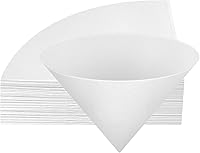
A fine non-woven cone or a metal mesh strainer catches the particles that matter. Paper coffee filters are fragile, and NACHLYNN says its non-woven cones are thicker and more heat resistant than paper.
A metal mesh strainer is reusable and works well for quick jobs, though it lets very fine silt through. A cone sits neatly over a jar or pot and lets oil drain by gravity.
Line a mesh strainer with a cone if you want both speed and fine filtration. Both options fit over most jars and pots.
Which filter cone should you pick?
The NACHLYNN cones come in a 50-pack of 10-inch non-woven filters. That's enough for months of home frying, and the wide 10-inch size fits most jars and fryer drain setups.
NACHLYNN says the cones also work for maple syrup, honey and coffee, so they earn their shelf space beyond the fryer. Each cone is single-use, so keep the pack near the fryer for quick jobs.
When is a reusable bag the better choice?
The AYUSEB reusable cone bag has folding arms that hook onto a fryer or pot, so it stands on its own while you pour. Its 0.5 mm micro-mesh traps fine particles, and AYUSEB says it is reusable for up to 1,500 uses.
Rinse it with hot water after each use and let it dry. It costs more up front than a pack of disposables but replaces them over time.
How do you store filtered oil so it stays fresh?
Seal the oil in a clean, dark container and keep it cool. Light, heat and air are what turn good oil rancid.
A container with a tight lid keeps smells in and oxygen out. Store it in a pantry away from the stove rather than on the counter next to the fryer.
If your kitchen runs warm, a cool basement shelf works too. Label the container with the date you filtered it.
That makes it easy to track how many rounds the oil has done. Our guide to how to clean a deep fryer pairs well with a regular filtering routine.
Don't top up old oil with fresh oil in the same jar without noting it. Mixing makes the age harder to track.
Which storage container works well?
The Oggi stainless steel grease container holds 1 gallon, or 4 quarts, and comes with a fine mesh strainer insert and a clamp-on lid. The insert strains bacon fat and fryer oil as you pour, and the lid keeps the contents sealed.
The stainless body wipes clean with a damp cloth and looks fine on the counter. It's also deep enough to pour straight from a pan, which helps when you don't want to ladle.
How often should you filter and when should you replace the oil?
Filter after every few frying sessions, and replace the oil when it stops passing the look-and-smell test. Frequency depends on how often you fry and what you cook.
Battered food and breaded cutlets shed more crumbs than fries or donuts. If you fry those often, strain after each batch.
Light use once a week calls for filtering weekly. Replace the oil when it turns dark, feels sticky or foams at normal heat.
A sour or acrid smell after straining means it's finished. Filtering slows the decline but can't restore oil that has already broken down.
For how much oil your fryer holds and how often a full change costs you, see how much oil does a deep fryer use.
What mistakes should you avoid when filtering fryer oil?
Don't pour hot oil, don't skip the sludge at the bottom and don't store oil in an open container. Each mistake costs you oil quality or a mess.
- Pouring while the oil is still hot risks burns and warped plastic.
- Scraping the bottom sludge into the filter clogs it and pushes grit into the clean oil.
- Leaving oil uncovered lets oxygen and dust in and lets smells spread.
- Reusing oil past its prime gives fried food an off taste.
- Storing oil in direct sun or next to the stove shortens its life.
Let the fryer cool fully and pour slowly. A steady hand and a wide cone beat a fast pour every time.
If you're also due for a full fryer clean, do that before the next frying session so the fresh oil starts in a clean basin.
The bottom line on filtering fryer oil
Learning how to filter deep fryer oil comes down to three things: cool the oil, strain it through a fine cone or mesh, and store it sealed in a dark spot. That routine keeps oil usable longer and fried food tasting clean.
For most home fryers, the Oggi can gives strained oil a proper sealed home and the NACHLYNN 50-pack covers months of filtering. Pick the AYUSEB reusable bag if you'd rather buy once and rinse it after each use.
Start with a batch this week and you'll see how much longer your oil lasts.
Frequently asked questions
How often should you filter deep fryer oil?
Filter the oil after every few frying sessions, or sooner if the oil looks dark or smells off. Home fryers that run once or twice a week can usually be strained weekly, while heavy use calls for filtering after each batch.
Can you filter oil while it is still hot?
Wait until the oil cools to a safe handling temperature before you strain it. Hot oil can burn skin and warp plastic funnels or containers, so let the fryer sit unplugged for at least a couple of hours first.
Does filtering make fryer oil last longer?
Straining removes loose food particles that speed up breakdown, so clean oil usually keeps its quality longer. Filtering does not reverse oxidation, though, so oil that is dark, thick or smells rancid should still be replaced.
Can you reuse oil after filtering it?
Yes, strained oil can be reused several times if it still looks and smells clean. Store it sealed in a cool, dark spot and discard it once it turns dark, foams at normal frying heat or gives food an off flavor.
What can you use to filter fryer oil at home?
A fine mesh strainer lined with a non-woven cone filter works well, and a reusable cone bag is a lower-waste option. Avoid paper coffee filters, which tear and clog when hot oil passes through them.